Egg
11 to 14 day incubation
Each pair lays 3 to 6 eggs per clutch inside an excavated cavity, almost always in a dead tree but sometimes in soft fascia or siding. Both parents share incubation in most species.
Local pest control help is one call away.
 Pest Control Services Nationwide Pest Control Services Nationwide
 Woodpeckers are a family of birds (Picidae) that range in size from the small Downy Woodpecker (about 6 inches and roughly an ounce) to the crow-sized Pileated Woodpecker (16 to 19 inches). The family includes Hairy, Pileated, Red-bellied, Red-headed, Northern Flicker, and Sapsucker species across the continental US. Every one of them is protected under the federal Migratory Bird Treaty Act, which makes killing, trapping, or even possessing feathers or eggs illegal without a USDA permit. That single legal fact shapes every honest response to woodpecker damage on your home.
Three distinct behaviors drive the damage you see on siding, trim, and fascia: drumming (loud territorial percussion in spring), feeding (small holes hunting carpenter ants, carpenter bees, or beetle larvae inside wood), and nest excavation (large clean cavities). Each behavior calls for a different non-lethal response, and getting the diagnosis right is the difference between a deterrent that works and one that wastes your money. This guide covers how to tell the three apart and what legal treatment actually looks like.
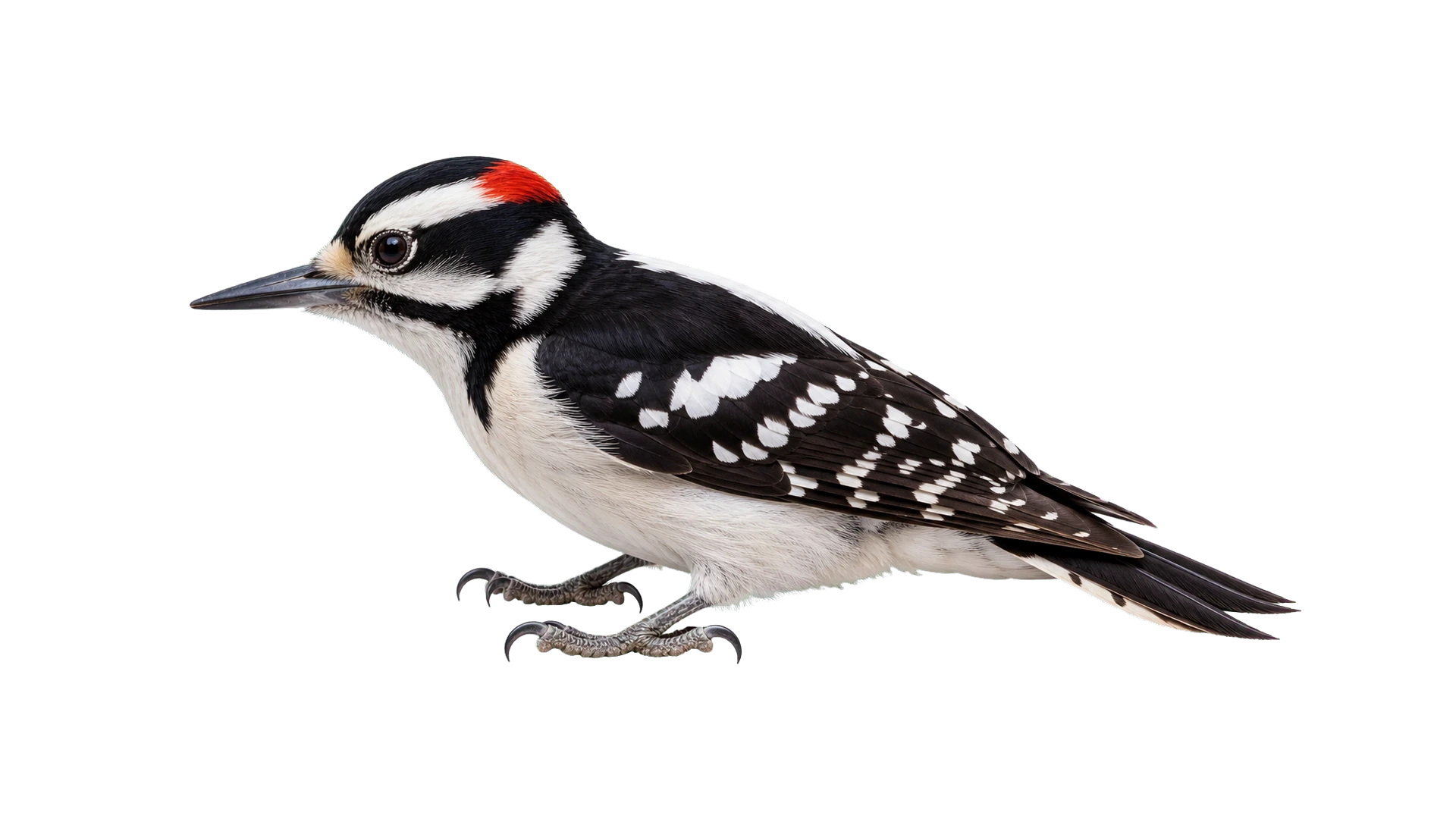
ID Card: Woodpecker
Related Species
Call to get matched with a local pest control pro.
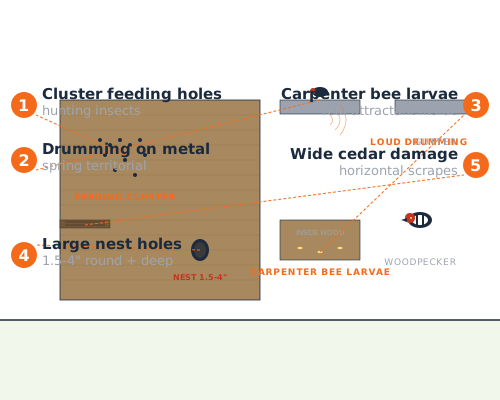
Woodpeckers target predictable parts of the house. South- and east-facing surfaces catch early-morning sun, which is when most drumming and feeding happens, and the same zones get hit year after year by the same birds returning to a site that worked. Walk these areas with a flashlight and look up at the eaves, not down at the foundation:
Every woodpecker on this continent is federally protected under the Migratory Bird Treaty Act. Lethal control requires a USDA Wildlife Services permit and is essentially never issued for residential damage. The legal response is non-lethal: visual deterrents (reflective tape, holographic streamers, predator decoys), audio deterrents, exclusion netting, and structural changes like composite siding in chronic-damage zones. When feeding holes are involved, the underlying insect issue is usually the real driver, and treating those insects is what stops the bird from coming back.
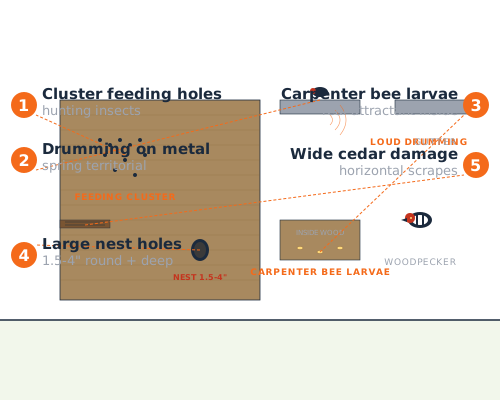
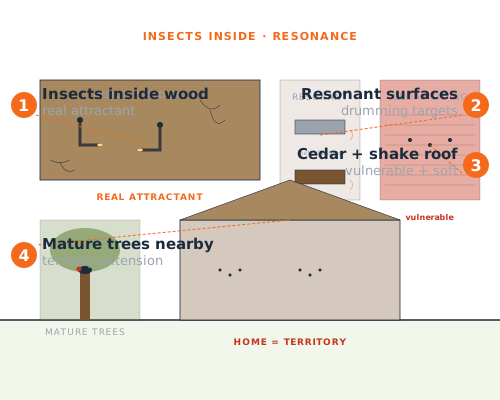
Spotting damage is step one. Understanding why your house in particular was chosen explains why a generic owl decoy from the hardware store rarely works and why the right response depends entirely on which behavior the bird is performing. Woodpeckers have strong site fidelity, the same individual (or its offspring) returns to a productive surface year after year, and the only way to break that cycle is to remove whatever made the surface productive.
What draws woodpeckers to your house:
Woodpeckers establish territory in early spring, with males drumming loudly to mark space and attract mates. Most species produce one brood per year (Southern Flicker populations sometimes get a second), and pairs often return to the same cavity in successive seasons. They live a long time for small birds (five to eleven years depending on species), which is exactly why a property gets hit again and again unless the underlying reason for the visit changes. Removing the food, replacing the resonant trim, or netting the access point are what actually break the pattern.
Find your scenario below. Severity for woodpeckers depends almost entirely on which behavior is occurring and how much structural wood is at stake.
| What You're Seeing | Severity | If Untreated | Next Step |
|---|---|---|---|
| A single bird drumming occasionally on the house during early spring | Early | Drumming usually ends by midsummer when breeding season closes, but the bird often returns the following spring to the same spot. | Identify the species and the drumming surfaces, install reflective tape or holographic streamers near the active spots, and monitor for 14 days. |
| Multiple drumming sessions plus small feeding holes appearing in siding | Moderate | Feeding damage compounds as the bird continues hunting insects inside the wood, and the underlying carpenter ant or carpenter bee population keeps growing. | Schedule a professional inspection. Have them check for carpenter ants, carpenter bees, or beetle larvae in the affected wood and install a behavior-matched deterrent program. |
| Significant feeding damage, nest excavation in siding, active hole expansion | High | Cavity damage spreads, the insect population behind the wall continues feeding the bird, and structural wood is being compromised week by week. | Call a wildlife specialist this week. Treatment needs underlying insect work plus a deterrent and exclusion combination at the active sites. |
| Multiple large holes across siding, structural concern, scope of siding replacement | Urgent | Established territorial bird with a productive food source on the property, structural integrity is at risk and damage has crossed into the contractor scope. | Call today and request both wildlife specialist work and a contractor consultation. Long-term fix usually combines exclusion netting plus composite siding replacement at chronic-damage zones. |
All US woodpecker species are federally protected, lethal control isn't on the table. If you're between two rows, treat the higher one as your situation.
Woodpeckers don't grow a colony on your house the way ants or termites do. They follow a yearly breeding calendar with a long adult lifespan and strong fidelity to productive sites. The stages below explain why a single deterrent installed in March may stop working by July and why birds return to the same property year after year.
11 to 14 day incubation
Each pair lays 3 to 6 eggs per clutch inside an excavated cavity, almost always in a dead tree but sometimes in soft fascia or siding. Both parents share incubation in most species.
21 to 30 days in the nest
Chicks hatch naked and helpless. Adults hunt aggressively for protein-rich insect prey to feed them, which is why feeding holes on siding usually spike during chick-rearing weeks.
Fledges in 2 to 3 months
Young birds leave the nest and develop adult plumage over the next several months. Some juveniles establish their own territory nearby, often within sight of the parental home, which is how chronic damage gets passed across generations on the same property.
Sexually mature at 1 year; lifespan 5 to 11 years
Adults produce one brood per year in most species (some Southern Flicker populations get two), and pairs often return to the same cavity in successive seasons. Their long lifespan and site fidelity are exactly why the same individual hits your house in March year after year.
Woodpecker damage tracks the behavioral calendar more than the lifecycle: drumming peaks in spring, feeding peaks during chick-rearing and again in fall, nest excavation happens in late spring. Long-lived birds with site fidelity return to the same property every year unless something on the property changes, the resonant trim gets replaced, the insect food source gets treated, or exclusion netting goes up at the active site.
Woodpecker activity runs year-round but the dominant behavior shifts sharply by season. Each quarter has a different lead complaint and a different right response, which is why a deterrent that worked one season may stop working the next.
Peak drumming season, March through June. Males advertise territory by hammering rapidly on resonant siding, metal flashing, gutters, and gable peaks early in the morning. This is the primary HOA and neighbor complaint window, the percussion is loud but causes little structural damage. Visual deterrents land with the most impact during this stretch.
Nesting and chick-rearing. Adults excavate cavities in fascia, dead trees, or soft siding and hunt insects aggressively to feed nestlings. Feeding damage on siding can spike during these weeks because protein demand is at its highest. The breeding territory locks in for the year.
Peak feeding damage. With breeding done, birds shift focus to insects in wood as a primary food source. Carpenter bee galleries, carpenter ant satellites, and beetle larvae all become easier to reach as wood dries and contracts. Cumulative siding damage often peaks here.
Continued insect feeding on the same sites. Territorial calling drops but the bird is still working productive food spots. In southern climates, sapsucker activity on live shade trees can continue all winter. Best window for installing exclusion netting because the bird is less defensive and structural work is easier.
Woodpecker control sits where wildlife law, building science, and entomology overlap. The wildlife law part is the hard wall: every woodpecker on this continent is protected by the Migratory Bird Treaty Act, so any approach that involves trapping, harming, or killing the bird is illegal without a federal permit, and those permits are essentially never granted for residential damage. The legal toolkit is small (visual deterrents, audio deterrents, exclusion, structural change) and using it well requires matching the tool to the behavior.
DIY mistakes follow predictable patterns. Homeowners stick reflective tape next to active feeding holes and watch the bird ignore it, because the insects inside the wood are too rewarding to give up. Or they hang a plastic owl decoy near a drumming spot and find the woodpecker drumming on the owl two days later, because static deterrents lose their effect fast. Or they patch the visible holes with caulk before treating the carpenter bees inside, and the bird simply makes new holes a foot away the next morning.
A specialist who handles woodpeckers starts with diagnosis: which species, which behavior, which underlying issue. For feeding damage, they probe the wood for carpenter ants, carpenter bees, and beetle larvae and treat what they find. For drumming, they identify the resonant surface and either replace it with non-resonant material or install moving visual deterrents at the right placement. For nest excavation, they install exclusion netting that physically blocks the cavity site. The legal options work when they fit the behavior, and almost never work when they don't.
Cost ranges run from $200 to $800 for deterrent installation and $500 to $2,500 when combined insect treatment is involved. Homes with chronic damage that's already crossed into siding replacement scope can land between $1,500 and $10,000 or more for the construction piece. Spending two seasons on hardware-store deterrents that don't match the behavior is the most expensive option available.
Woodpecker work is diagnosis first, deterrent second. A specialist confirms which of the three behaviors is driving the damage, treats any underlying insect issue, and matches the legal deterrent to the behavior. Generic reflective tape stuck up randomly almost never works, because the response has to fit the cause. Here's what changes:

 Diagnoses Which Behavior Is Driving the Damage
 Drumming, feeding, and nest excavation each call for a different response. Damage pattern, time of year, surface type, and (where possible) species identification together pin down what the bird is doing and why.
Treats Underlying Insects When Feeding Is the Cause Feeding holes near siding almost always sit on top of a hidden carpenter ant, carpenter bee, or wood-boring beetle population. Treating those insects removes the food motivation, and the bird stops returning within days.
Installs Visual and Audio Deterrents for Drumming Holographic tape, predator-eye balloons, and properly placed sound devices work for territorial drumming because the goal is to make the surface unappealing, not to harm the bird. Placement and rotation matter more than the product.
Adds Exclusion Netting for Persistent Cavity Damage Bird netting (3/4-inch mesh) hung 3 inches off the structure physically blocks access to vulnerable fascia and siding. Properly installed netting is nearly invisible from the street and effective for years.

DIY is real for woodpeckers in a way it isn't for many other species, the legal options are limited and most of them are homeowner-accessible. The catch is matching the right tool to the right behavior, which is where professional diagnosis usually earns its keep.
DIY is best aimed at identification and short-term deterrent work. Useful steps with honest limits:
A wildlife specialist brings the diagnostic eye, the entomology connection, and the exclusion installation experience that turn recurring damage into a one-time fix:
Feeding holes in siding almost always point to a hidden insect problem in the wood, and federal protection means every response has to be non-lethal. Connect with a local specialist who diagnoses the behavior, treats the underlying insects, and installs deterrents that match.
Real results from people who had the same problem and solved it.

"No pressure, just options."
I appreciated being given eco-friendly options without being pushed. The technician explained tradeoffs honestly and let me decide based on my priorities. They were transparent about what each approach involves. The no-pressure approach and honest information helped me make a confident decision.
"No pressure, just options."
I appreciated being given eco-friendly options without being pushed. The technician explained tradeoffs honestly and let me decide based on my priorities. They were transparent about what each approach involves. The no-pressure approach and honest information helped me make a confident decision.

"The inspection caught what we missed."
I didn't realize how much damage raccoons can cause once they get inside. The wildlife specialist explained what areas they inspect first and why raccoon issues are handled more carefully than regular pests. They showed me the damage and explained removal and exclusion strategies. Understanding the potential for damage made me glad I called professionals.

"The problem finally stayed gone."
Ants kept returning no matter what we did. The tech treated the trail areas and explained how to handle food storage and moisture so the ants don't keep coming back. It's been months and we haven't seen them again. I appreciated that it wasn't just a one-and-done spray.

"Clear expectations and a real plan."
I was overwhelmed and didn't know what was realistic to fix quickly. The inspector explained what results to expect and how long it typically takes depending on the ant species. They treated the right places and gave simple prevention tips. Everything felt structured and easy to follow.

"They found the entry points fast."
Ants were showing up in the kitchen and we couldn't figure out where they were coming from. The tech tracked the activity and pointed out two entry points we never would've noticed. After treating and sealing those areas, the ants disappeared. It was quick and surprisingly thorough.

"No pressure, just helpful info."
I mainly wanted to understand what was happening before committing to anything. The inspector walked me through the likely cause and the differences between treatment approaches. They answered questions without rushing me. The plan we chose worked and the ants were gone within days.

"The tech helped me stop wasting time."
I kept trying different products and nothing was sticking. The tech explained why some solutions don't work for certain ant problems and focused the treatment where it would actually matter. They also gave prevention tips that were easy to implement. The difference was obvious within the first week.

"We finally understood what to do next."
We felt stuck because nothing we tried lasted. The tech explained how to find the source of the problem, treated both indoor and outdoor areas, and helped us build a prevention routine. It wasn't complicated. Just the right steps in the right order. We've had a huge improvement since.

"They fixed what was actually causing it."
Ants kept showing up in the same spot. The pro explained that the visible ants weren't the real issue and focused the treatment on where they were coming from. They identified the entry path and treated it properly. The problem stopped and hasn't returned.

"It felt like a real inspection, not a quick spray."
The tech spent time figuring out where the ants were entering instead of just spraying around. They walked me through the likely reasons and what to watch for over time. After treatment, ant activity dropped fast and stayed low. The detailed approach gave me confidence.

"Small changes made a big difference."
We didn't realize how much our routine was attracting ants. The inspector explained simple prevention steps and treated the areas where activity was highest. Once those changes were in place, we stopped seeing ants inside. It was a practical approach that actually worked.

"The explanation alone was worth it."
I'd been doing random treatments without understanding what I was dealing with. The tech explained how ants behave and why certain approaches work better. They treated strategically instead of just spraying. It made the whole thing feel manageable.

"We stopped chasing the problem and solved it."
We kept wiping down counters and the ants would be back the next day. The pro identified the entry areas and explained the treatment plan clearly. Once they treated and targeted the colony, the ants disappeared quickly. It felt like we finally got ahead of it.

"They didn't oversell. Just solved it."
The tech explained what treatment was necessary and what wasn't. They focused on the entry points and corrected the conditions that were attracting ants. The work felt honest and effective. I liked having clear expectations and seeing results quickly.

"It wasn't just 'spray and go.'"
I appreciated the step-by-step explanation and the focus on prevention. The inspector treated the areas where ants were getting in and helped me understand what to change at home. The ants stopped showing up and it's been consistent. The approach felt thoughtful and sustainable.

"It finally made sense why they kept coming back."
I had ants showing up every few months and never understood why. The tech explained how outdoor nests and weather changes affect indoor activity. They treated the perimeter and entry points instead of just the inside. Since then, we haven't had recurring issues.

"Targeted instead of overdone."
I was worried about over-treating the house. The pro focused on specific problem areas and explained why blanket spraying wasn't necessary. The ants stopped appearing, and we didn't feel like chemicals were used unnecessarily. That balance mattered to us.

"Clear answers without jargon."
The tech explained everything in plain language and answered questions without rushing. They identified the type of ant we had and adjusted the treatment accordingly. Knowing why the approach worked gave me confidence it would last.

"They focused on prevention, not just treatment."
I liked that the tech talked through how to keep ants from returning after the treatment. They addressed moisture issues and entry points around the home. The treatment worked, and the prevention tips helped us stay ahead of future problems.

"No guessing, just a plan."
I was tired of guessing what would work. The inspector explained the cause of the issue and outlined a clear plan of action. After treatment, the ants disappeared and we haven't had to revisit the problem. It felt efficient and well thought out.

"They explained what to expect upfront."
The tech set expectations about timing and results before starting. They explained that some activity might happen initially and why. Everything played out exactly as described, and the ants were gone shortly after. That transparency made a big difference.

"Helpful without being overwhelming."
I didn't realize there were different types of ants or that it mattered. The inspector walked me through what they were seeing and explained how ant behavior affects treatment. It made it easier to ask the right questions and understand the solution.

"Saved me a lot of guessing."
I was close to trying random sprays for the ants. Talking with the tech helped me understand what was realistic to address and what usually doesn't work. The targeted treatment solved the issue quickly and saved time and frustration.

"It felt tailored to our home."
The tech didn't just apply a standard treatment. He looked at where we were seeing activity and adjusted the approach to our layout and yard. The ants stopped showing up and we understood how to keep it that way.

"Straightforward and effective."
I appreciated how straightforward everything was. The pro explained the issue, treated the problem areas, and gave us a few simple steps to prevent future issues. The ants were gone and it didn't feel complicated.

"They explained how the weather played a role."
I didn't realize seasonal changes could affect ant activity so much. The tech explained how heat and rain push ants indoors and what to do about it. They treated the problem areas and gave tips to prevent future issues. The explanation helped everything click.

"It wasn't as complicated as I expected."
I assumed pest control would be disruptive or complicated. The technician explained the steps clearly and focused on targeted treatment. The ants stopped appearing quickly and the process was smoother than expected.

"They helped me understand the bigger picture."
Instead of just treating the ants I saw, the tech explained what was happening around the house that made it attractive to pests. Once those factors were addressed, the problem resolved quickly. It felt educational as well as effective.

"Clear communication from start to finish."
I appreciated how clearly everything was explained before treatment began. The inspector walked through the process and answered all my questions. The ants were gone shortly after and we felt confident about prevention going forward.

"They addressed what we were missing."
We kept focusing on cleaning, but the tech showed us where ants were actually entering. Once those points were treated and sealed, the issue resolved. It was reassuring to finally understand the root cause.

"A methodical approach that worked."
The pro explained how they identify ant trails and colonies before treating. They took a methodical approach instead of rushing through. The ants stopped appearing and the fix has held up well.

"They understood desert pest behavior."
Living in Phoenix, pests behave differently than other places. The tech explained how heat drives ants indoors and what treatments work best here. The solution was effective and tailored to our environment.

"They took the time to do it right."
I appreciated that the tech didn't rush. He inspected the problem areas carefully and explained what they were seeing. The treatment worked quickly and the ants haven't returned.

"They understood the local pest issues."
The tech explained how the humidity here contributes to ant problems and why certain treatments work better in this climate. They focused on outdoor entry points and moisture-prone areas. The ants cleared up quickly and haven't come back.

"Finally something that lasted."
We'd dealt with recurring ants for years. The pro explained why flooding and moisture play such a big role here and adjusted the treatment accordingly. It's been months without seeing ants, which is a big win for us.

"They knew exactly what works in Arizona."
The tech explained how desert conditions affect ant behavior and which treatments are most effective here. They targeted the right areas and avoided unnecessary spraying. The ants disappeared quickly.

"Clear, calm, and professional."
I appreciated how calmly everything was explained. The inspector identified the ant problem, explained the treatment, and answered my questions without rushing. The solution worked and gave me peace of mind.

"They handled it efficiently."
The tech inspected the problem areas, explained the plan, and got to work quickly. The ants were gone within days and the process felt efficient without being rushed.

"Simple explanations, solid results."
I liked how simply everything was explained. The pro didn't overcomplicate things and focused on what mattered. The ants stopped appearing and we haven't needed follow-up treatments.

"They showed me what to watch for."
Beyond treating the ants, the tech explained what signs to watch for if activity starts again. That knowledge made me feel more in control. So far, everything has stayed clear.
Direct answers to what homeowners ask most about federal protection, damage diagnosis, legal deterrents, and the insect problem behind most feeding holes.
Woodpeckers interact with buildings for three distinct reasons: territorial drumming (rapid pecking on resonant surfaces like metal gutters, chimney caps, or cedar siding to broadcast their presence, typically in spring), foraging for insects (methodical probing and chipping at wood siding, fascia, or trim where they detect larvae or carpenter bee activity beneath the surface), and cavity excavation for nesting (creating round, deep holes in wood siding or trim). Identifying which behavior is occurring is essential because each requires a different management approach, drumming is a noise issue, foraging indicates an underlying insect problem, and nesting creates structural damage.
Woodpecker damage to siding should be addressed by first determining whether the bird is drumming, foraging, or nesting. If the woodpecker is probing or chipping at specific areas, inspect the underlying wood for carpenter bee galleries, wood-boring beetle larvae, or carpenter ant activity, resolving the insect problem eliminates the food source attracting the bird. For territorial drumming, hanging reflective tape, pinwheels, or bird-eye balloons near the drumming site can discourage the behavior. Covering damaged areas with hardware cloth or sheet metal provides a physical barrier. All native woodpeckers are federally protected, so lethal methods or nest disturbance require specific permits.
Pest birds such as pigeons, sparrows, and starlings are attracted to buildings that provide sheltered ledges, eaves, signage gaps, and HVAC equipment platforms that mimic natural cliff or cavity nesting sites. Once birds successfully nest and fledge young in a location, strong homing instincts bring them back to the same spot each breeding season. Nearby food sources like open dumpsters, outdoor dining areas, or loading docks reinforce the habit and can quickly grow a small bird presence into a large, established flock.
Bird droppings are highly acidic and can corrode metal, stain painted surfaces, and degrade roofing materials over time. Accumulated droppings in enclosed or semi-enclosed spaces pose a histoplasmosis risk, and nesting materials can clog gutters, drains, and ventilation systems, creatingfire hazards and water damage. Pest birds also carry ectoparasites like bird mites, ticks, and fleas that can migrate indoors when birds vacate nests, causing secondary infestations inside the building.
Most providers in our network can schedule an inspection within 24-48 hours. For urgent situations, likeactive structural damage or large colonies, same-week emergency service is often available. Response times depend on your location and the provider's current schedule.
Your provider inspects the property to identify the pest, locate nesting or entry points, and assess the scope of the problem. You get a clear explanation of what they found, what they recommend, and a written scope before any work begins.
Modern pest control products are designed to break down quickly after application and pose minimal risk to people and pets when applied correctly. Most providers ask you to keep kids and pets out of treated areas for 1 to 2 hours while the product dries, after which the area is generally safe again. Always confirm specific re-entry times with your provider, and let them know about pet birds, fish, or reptiles, since some treatments require extra precautions for those species.
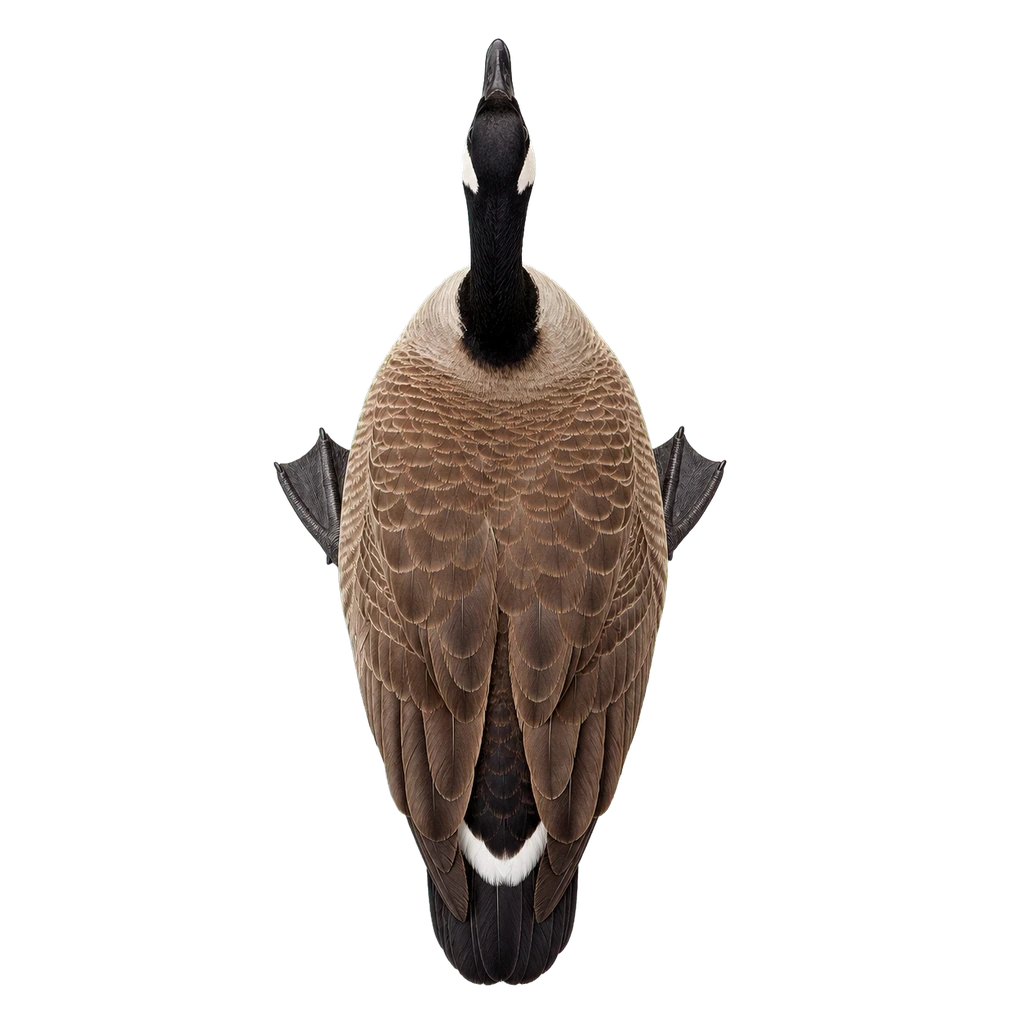
Canada geese congregate on lawns and near ponds, leaving large volumes of droppings that contaminate grass and water features. They become aggressive during nesting season and can cause significant turf damage to residential and commercial properties.
Learn More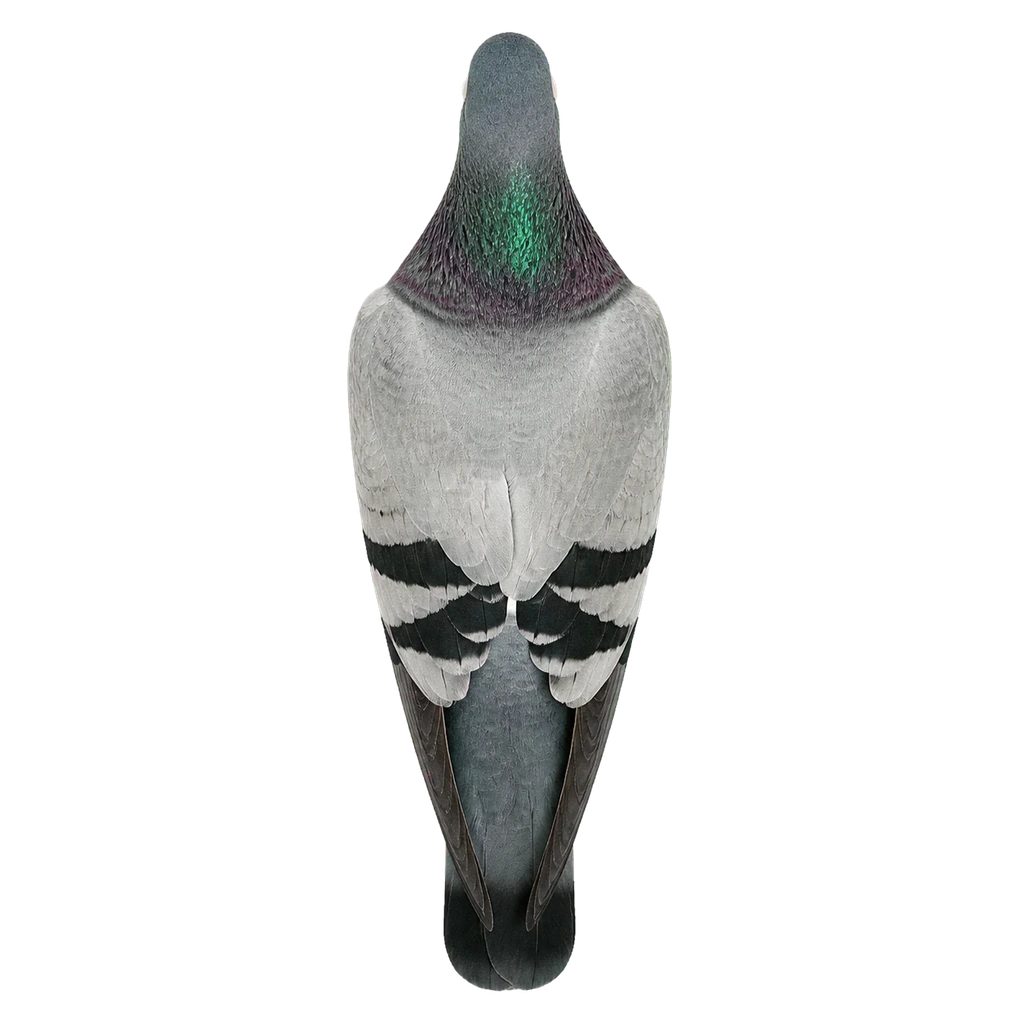
Pigeons roost on rooftops, ledges, and signs year-round, producing acidic droppings that corrode building materials and create slip hazards. Their nests and waste also harbor diseases, mites, and parasites that can affect household health.
Learn More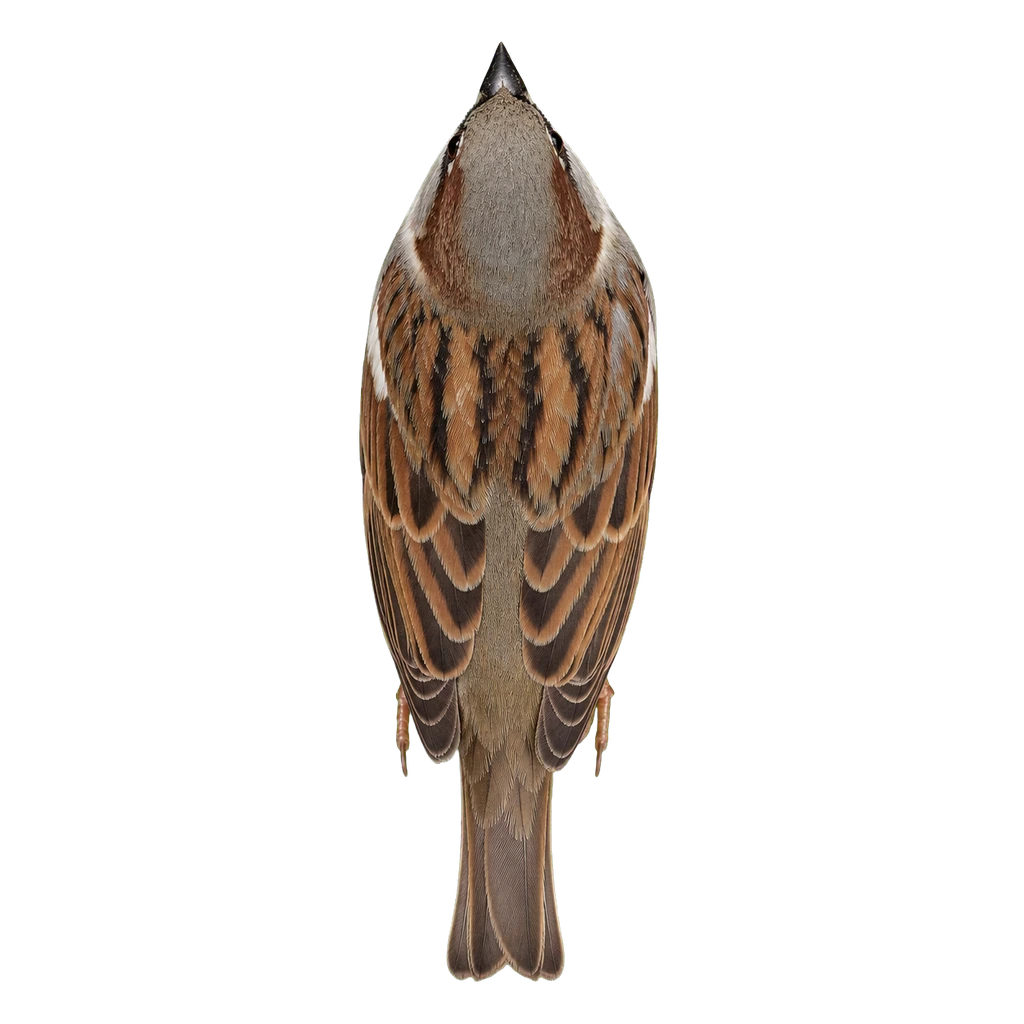
House sparrows build bulky nests inside vents, signs, and building cavities, blocking airflow and creating fire hazards. They breed rapidly, and their nesting debris attracts carpet beetles, mites, and other secondary pests.
Learn More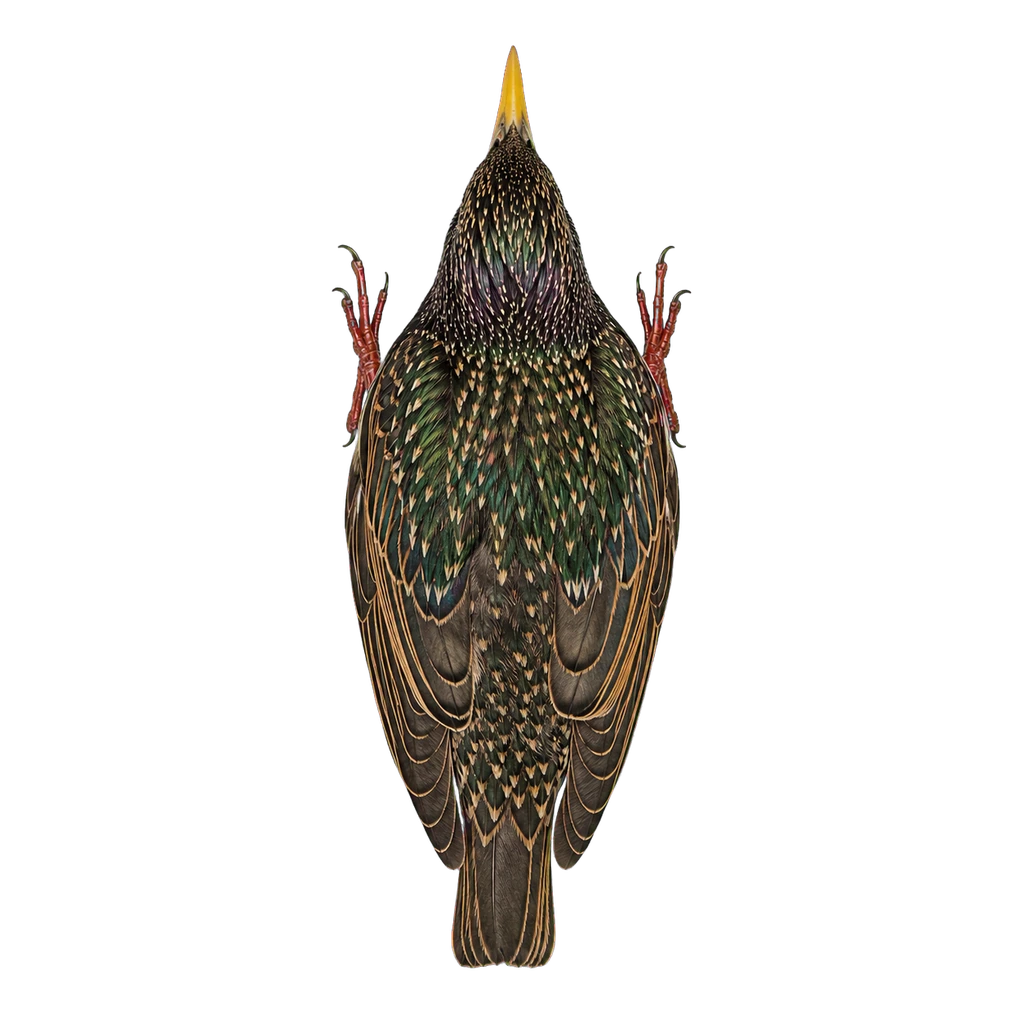
Starlings are invasive birds that form massive flocks and nest in building cavities, dryer vents, and soffits. Their accumulated droppings pose respiratory health risks and can cause structural corrosion beneath roosting sites.
Learn More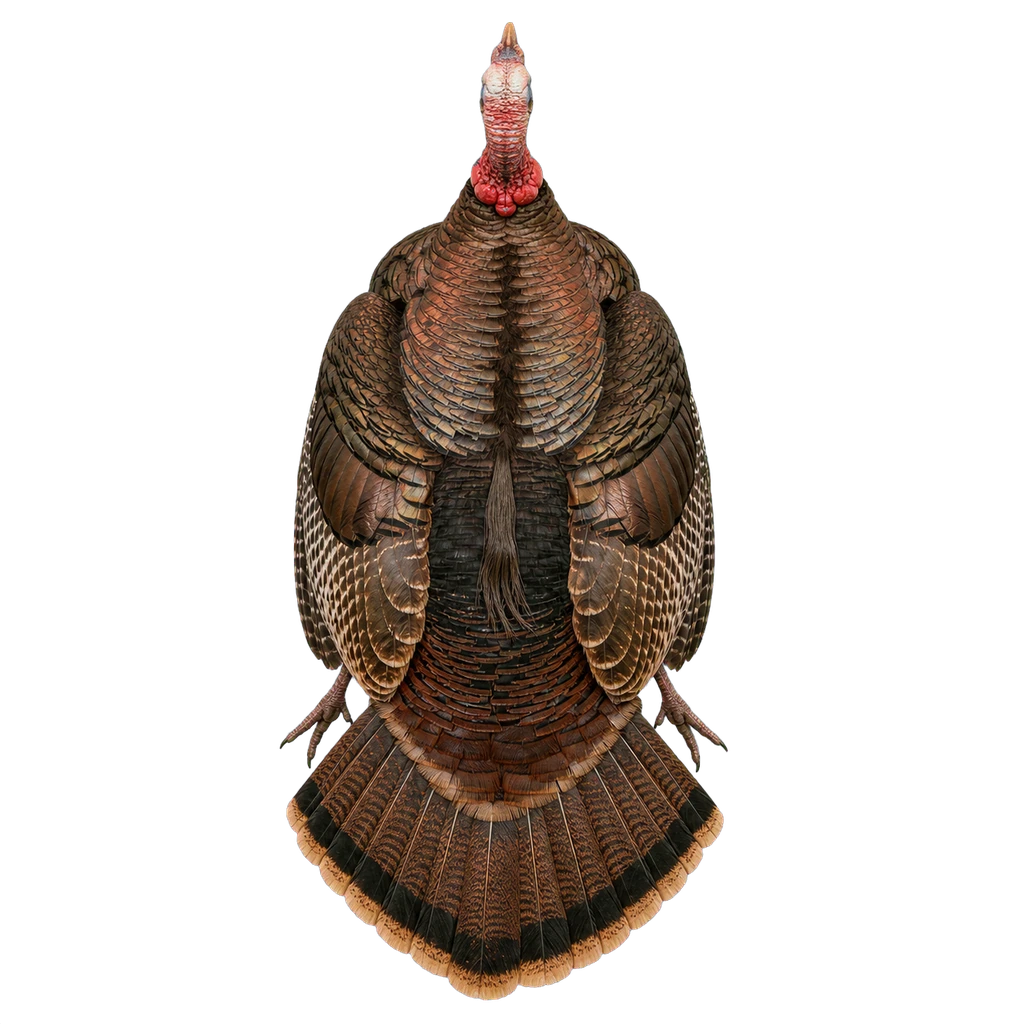
Wild turkeys have become increasingly bold in suburban neighborhoods, forming large flocks that damage landscaping, leave droppings everywhere, and can become aggressive toward people and pets during mating season.
Learn MoreLocal wildlife specialists who handle woodpecker behavior diagnosis, legal deterrents, and underlying insect treatment are ready to inspect and recommend the right response, no obligation.